What Private Utility Locating Costs in Florida
Private utility locating is normally priced as a day rate rather than per utility or per line found. That reflects how the work actually goes: a crew arrives, sweeps the area you need cleared, and marks what is there. The variable is how long that takes, not how many lines turn up.
We also price by the linear foot on request, which suits long, narrow scopes — a road alignment, a pipeline corridor, a bore route — where a day rate is a clumsy fit. Linear-foot pricing varies with the scope, so tell us what you have and we will quote it whichever way works out better for you.
For a small residential property, $400 is our minimum — that is the floor for putting a crew and equipment on site. Larger commercial and engineering projects are quoted as a day rate for the scope.
In a normal working day a crew covers roughly 1.5 acres of open site, or about 800 linear feet when running an alignment along a street. Those figures are the honest starting point for estimating your own job: if your site is two acres of congested commercial ground, plan on more than one day.
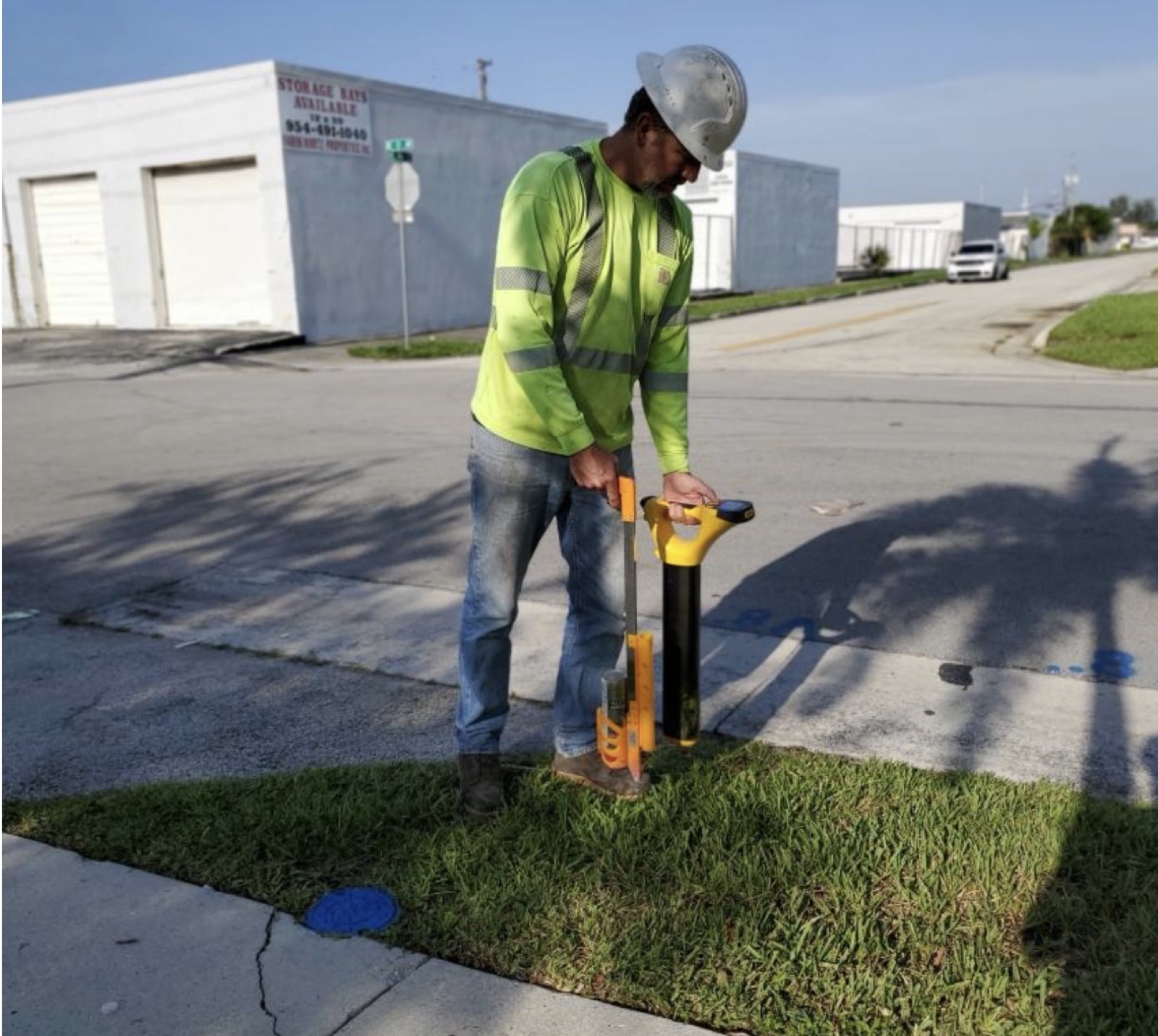
What the Day Rate Includes
Knowing the number matters less than knowing what you get for it. Every locating day includes:
- A licensed locator on site — with a helper added on larger jobs where the area justifies a second set of hands.
- Both EM and GPR, at no extra charge. Electromagnetic induction finds what carries a signal. Ground penetrating radar finds what does not — PVC water, HDPE gas, empty conduit, concrete storm. Running only one of the two leaves gaps, so both run on every project rather than GPR being sold as an upgrade.
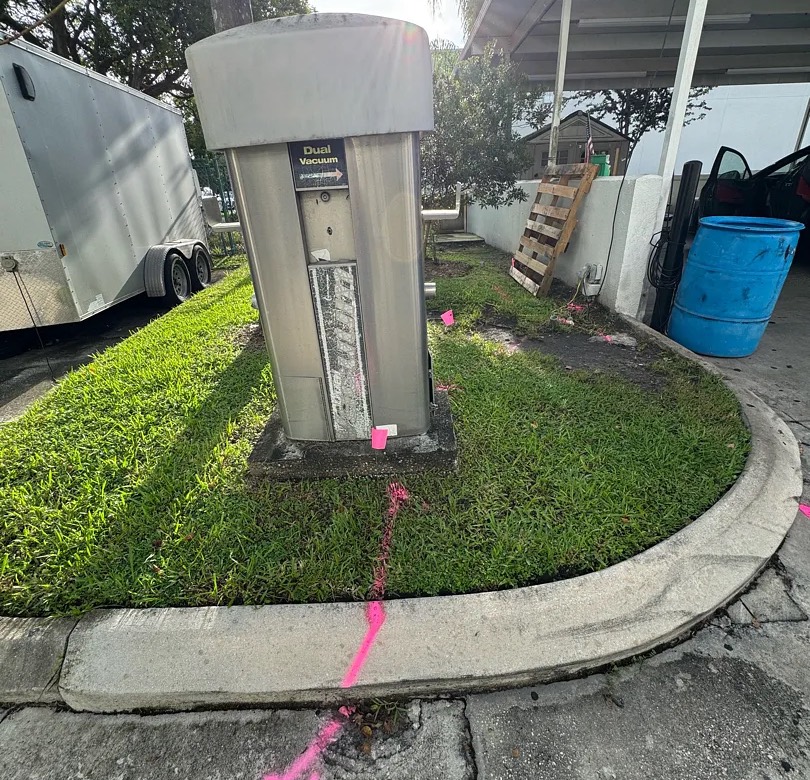
- Field markings — pink paint and flags on the ground, placed as we go.
- A full working day — from when we leave the yard until the scope is finished, or until roughly 3:00–3:30.
Weekend and after-hours locating is billed at the same rate as a weekday. There is no premium for working around your schedule.
What Pushes the Price Up
Three things drive a locating day longer, and they are worth understanding because you can often estimate your own job from them:
Size of the area
The most direct factor. A single residential lot is a fraction of a day. A multi-acre commercial parcel or a long street alignment is one or more full days.
Utility density
A congested site takes materially longer per square foot than an open one. Work near a hospital campus, an institutional site, or a built-up commercial corridor means far more infrastructure running through the same ground — more lines to trace, more signals interfering with each other, and more time spent resolving which mark belongs to which utility.
Traffic and access
Locating in a live traffic corridor is slower than locating on a closed site. Time spent waiting for gaps in traffic, working around parked vehicles, or coordinating access on an operating property all comes out of the working day.
Day rate or linear foot — which applies to you
For an area you need swept — a parcel, a building footprint, a parking field — the day rate is almost always the cleaner number. For a long linear scope where the work is a corridor rather than an area, ask for linear-foot pricing and we will price it that way. Neither is a premium over the other; it is just a question of which unit fits your scope, and we will tell you which one comes out cheaper for what you are trying to clear.
What Is Quoted Separately
A locating day covers locating. These are priced on their own, so you are not paying for what you do not need:
- Utility mapping — sub-inch accurate GPS captured in the field and delivered as a KMZ overlay on Google Earth. Priced by the size of the area. This is the answer to paint washing away: the marks are temporary, the mapped data is not.
- Test holes and potholing — quoted separately, per hole, with its own setup. Locating and potholing are commonly bought together, and doing both on one mobilization works out better than booking them apart.
- MOT and traffic control — where a job needs cones, signage or a flagger there is a fee for it, unless you are covering MOT and permitting yourself.
- Multi-day work — billed at the day rate per day. The second day is not discounted, because each day carries its own mobilization.
Why $400 Is Cheap Compared With a Strike
The reason to weigh locating cost against something is that the alternative has a price too. An unlocated strike runs into the high tens of thousands, and often past it — and the repair invoice is usually the smaller half. The expensive part is the project delay while a carrier or utility owner schedules their own crew to fix it on their timeline, not yours.
Which brings up the obvious objection: 811 is free, so why pay anything?
Sunshine 811 is free, required, and does not mark private utilities. It covers member-owned facilities in the public right of way. It does not cover site electrical, irrigation, private telecom and fiber, fire loops, or anything on the private side of the meter. On most commercial sites that is where the majority of the strike risk actually sits, which is the whole point of a private locate — see what a private utility locator does for the full distinction.
How to Compare Locating Quotes
If you are weighing several prices, the number is the least useful thing to compare. Ask how the locate is actually performed.
We have seen locates where nobody ever connected to a utility — where the marks were transferred from old prints onto the ground and called a locate. That is drafting, not locating. Record drawings are a starting hypothesis; they are frequently wrong about position and almost always wrong about depth.
The question worth asking any locating contractor is simply: are you direct-connecting to the utility, and are you running GPR to verify? We connect where there is an access point to connect to, and scan to confirm what the signal is telling us. A cheaper locate where neither happened is not a saving — it is the same risk you had before you paid.
Locating Gives You Position, Not Depth
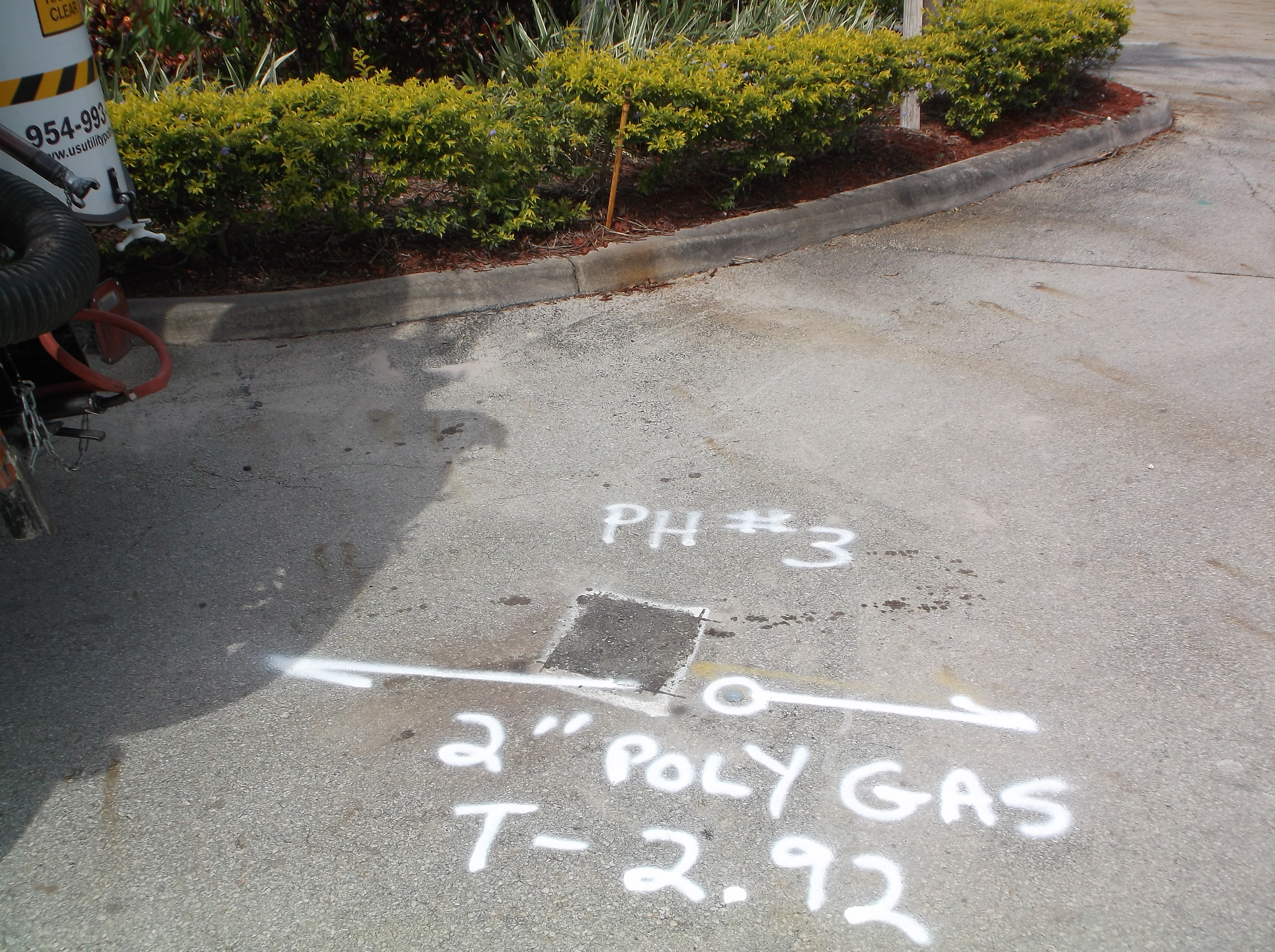
This matters for budgeting, so it is worth being plain about. Locating establishes horizontal position. We mark where a utility runs. We do not mark how deep it is.
Depth readings from a locator are estimates, and they drift. GPR depth in particular is affected by the South Florida water table and by obstacles in the soil — conditions that are the norm here, not the exception. Publishing an estimated depth as though it were measured would be doing you a disservice.
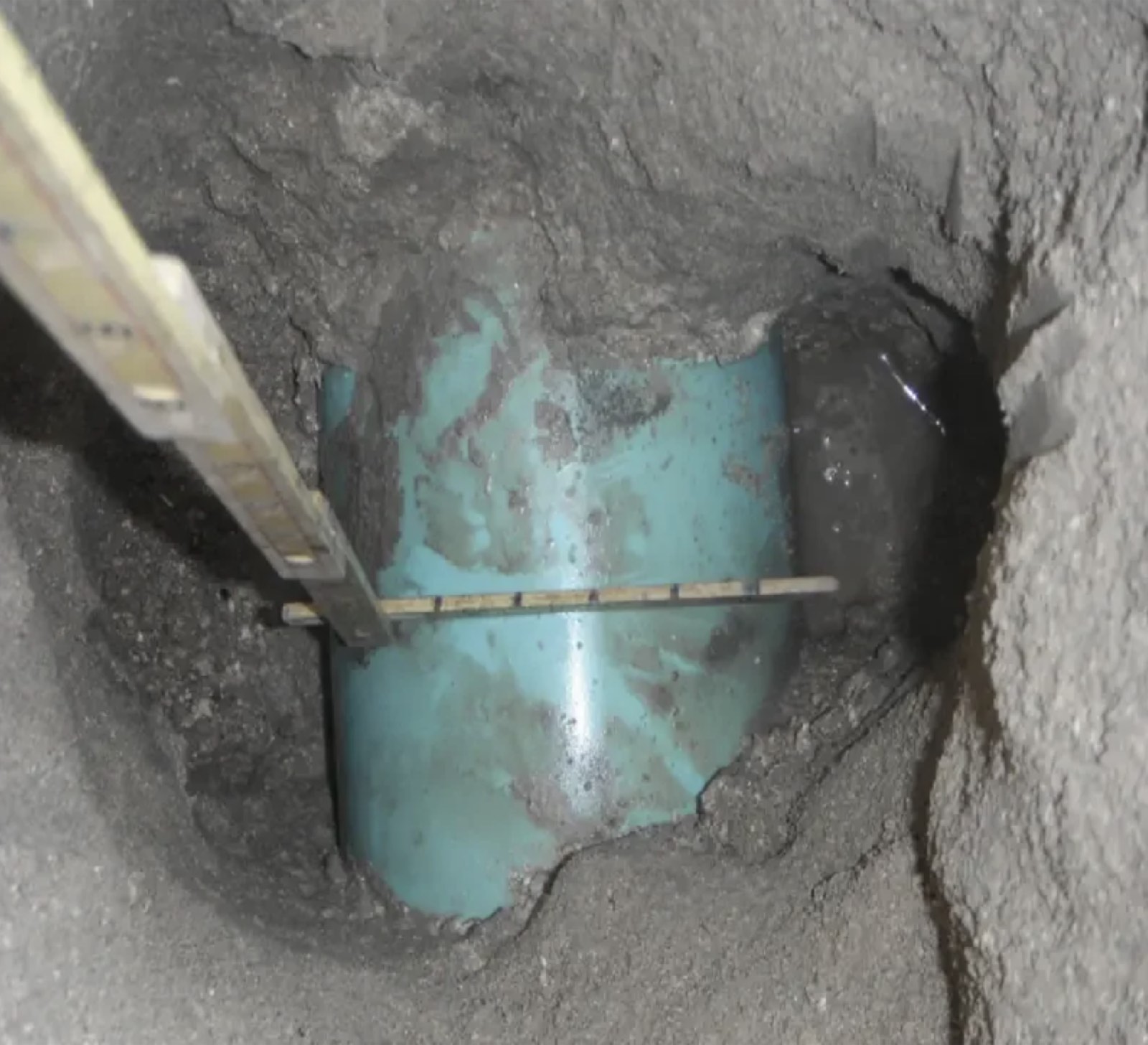
If you need depth — for a crossing, a bore profile, a foundation, or a design submittal — that comes from a test hole. The utility is exposed and depth to top of pipe is measured off the pipe itself. That is what ASCE 38-22 calls Quality Level A, and it is the only way to get it.
When the signal will not cooperate
Sometimes there is nothing to connect to — no tracer wire, non-conductive pipe, no accessible riser or valve. When that happens we sweep the area with GPR to see whether something is there. If we find an anomaly and cannot identify it, we mark it as unknown rather than guessing or leaving it off. An honest unknown is more useful to you than a confident wrong answer, and it tells your crew exactly where to dig carefully.
What to Send Us for a Quote
Quotes and availability normally go out the same day — the calls and emails come to the owner, not a call center. To price a job we need:
- Site address
- Scope of work — locate everything on the parcel, clear a bore path, find a specific service, and so on
- A marked-up area — a Google Earth screenshot with the area that needs locating boxed in is ideal, and the single fastest way to get a firm number
- Plans if you have them — site plan or utility as-builts
- Timeline — your dig or design date
Next-day scheduling happens regularly depending on crew availability.
Typical Jobs That Need Private Locating
Most of our work is commercial and engineering, with residential jobs handled as needed. Locating usually gets called in for:
- Pre-design survey for a civil engineer laying out a site
- Clearing a bore path before directional drilling
- Site development and new construction before the first cut
- Fence, sign and light-pole foundations — small jobs with real strike risk
- Tree removal and landscaping, where roots and utilities share the same ground
- Drainage and utility tie-ins on an existing street
- Solar, EV charger and generator installations on commercial property
- Septic and tank installations
- Due diligence before a property purchase
Frequently Asked Questions
How much does private utility locating cost?
Private utility locating is priced as a day rate rather than per utility or per foot. A small residential property starts at $400, which is our minimum for mobilizing a crew. Larger commercial and engineering projects are quoted as a day rate for the scope. In a normal day a crew covers roughly 1.5 acres, or about 800 linear feet when running a street alignment.
Why pay for locating when 811 is free?
Sunshine 811 is free and required by Florida law, but it only covers member-owned utilities in the public right of way. It does not mark privately owned infrastructure: site electrical, irrigation, private telecom and fiber, fire loops, or anything past the meter. On most commercial sites the majority of strike risk sits in exactly those private lines, which is what private locating covers.
Is GPR included in the price or charged extra?
Ground penetrating radar is included in the day rate alongside electromagnetic locating. It is not an add-on. Both methods run on every project because EM only finds what carries a signal, and a great deal of South Florida infrastructure is non-conductive PVC and HDPE that EM cannot detect.
Can locating tell me how deep the utility is?
No, not reliably. Locating establishes horizontal position. Depth readings from a locator are estimates and can drift, and GPR depth in particular is affected by the South Florida water table and by obstacles in the soil. The only way to get an accurate depth is a test hole, where the utility is exposed and depth to top of pipe is measured directly.
Do you charge more for weekend or after-hours work?
No. Weekend and after-hours locating is billed at the same day rate as normal working hours.
Do you price by the linear foot instead of a day rate?
Yes, on request. The day rate is our standard because most locating scopes are areas to be swept rather than lines to be followed, but for long linear work such as a road alignment, a pipeline corridor or a bore route, linear-foot pricing often fits better. Rates vary with the scope, so send the details and we will quote it whichever way works out better for you.
How much area can you locate in one day?
Roughly 1.5 acres of open site, or about 800 linear feet along a street alignment. Utility density and traffic both reduce that figure: a congested corridor near a hospital or a built-up commercial block takes considerably longer per foot than an open residential lot.
Get a Price for Your Site
Send the address, the scope, and a boxed-in aerial of the area, and you will normally have a price and availability the same day. Call (954) 849-2859 or request a quote online.
Pricing: see what utility potholing costs per test hole in South Florida.