When you need to excavate near buried utilities, the choice of excavation method is not just a productivity decision — it's a safety and liability decision. Every year in the United States, contractors strike buried utilities thousands of times, resulting in deaths, injuries, service outages, and millions of dollars in damage and fines. The method you choose determines your risk. This guide compares hydro excavation (and air excavation), mechanical backhoe digging, and hand digging across every relevant dimension.
The Problem with Mechanical Excavation Near Utilities
A standard backhoe bucket moves through soil with tremendous force — typically hundreds of thousands of foot-pounds of breakout force. It has no ability to sense a buried utility before contact. By the time an operator sees a pipe or conduit in the bucket, the damage is done.
The consequences depend on what was hit:
- Natural gas main: Immediate ignition risk, evacuation of surrounding area, potential explosion. Emergency repair costs often exceed $100,000.
- Energized electrical conduit: Electrocution risk to operators and bystanders; outages affecting hundreds or thousands of customers; utility owner liability claims.
- Fiber optic trunk cable: Service outages for hospitals, data centers, financial institutions, 911 services. A single fiber cut can carry millions of dollars in liability.
- Water main: Flooding, road damage, service interruptions, and contamination risk if the main serves potable water.
- Sewer main: Sewage release creating public health hazards and EPA reporting requirements.
Even "minor" utility strikes — hitting a small telecom line or irrigation line — create project downtime, repair costs, and document a failure to exercise proper care that can expose your company to negligence claims.
Method Comparison: Hydro Excavation vs. Mechanical vs. Hand Digging
The table below summarizes the key differences between excavation methods for work near buried utilities:
| Method | Speed | Safety Near Utilities | Soil Conditions | Best For |
|---|---|---|---|---|
| Air Vacuum Excavation | Fast in sandy/granular soil | Excellent — no mechanical contact | Best in loose, sandy soils (South FL ideal) | Utility potholing, daylighting, sensitive utilities (fiber, gas) |
| Hydrovac Excavation | Fast in clay and cohesive soils | Excellent — no mechanical contact | Effective in clay, hard fill, rocky soils | Utility potholing, slot trenching, cohesive soils |
| Mechanical (Backhoe/Excavator) | Very fast for bulk excavation | Poor near utilities — no tactile feedback | All soil types | Bulk earthwork away from utilities; trenching in clear zones |
| Hand Digging (Shovel/Spade) | Very slow — 1–2 cubic yards/hour per person | Good — tactile feedback, but still risk of spade strike | Practical only in loose soils at shallow depth | Final exposure within 18" of marked utility; small areas |
Why OSHA and Utility Owners Require Non-Destructive Methods
OSHA's excavation standard (29 CFR 1926 Subpart P) requires employers to take "acceptable means" to protect workers from underground utility hazards. OSHA's interpretation guidance makes clear that mechanical excavation within the tolerance zone of a marked utility is not acceptable unless visual confirmation has been made — which means non-destructive exposure first.
Utility owners — FPL, Peoples Gas, AT&T, and municipal water and sewer utilities — typically include facility protection agreements and technical standards in their pipeline/conduit crossing permits that explicitly require non-destructive excavation within a specified clearance of their infrastructure. Violating these requirements can void the permit and expose the contractor to the full cost of any damage.
The Florida Department of Transportation (FDOT) Standard Specifications Section 105 and utility accommodation policy similarly require the contractor to protect existing utilities during construction — language that has been interpreted in multiple cases to require non-destructive methods in the utility zone.
Cost Comparison: Immediate vs. Risk-Adjusted
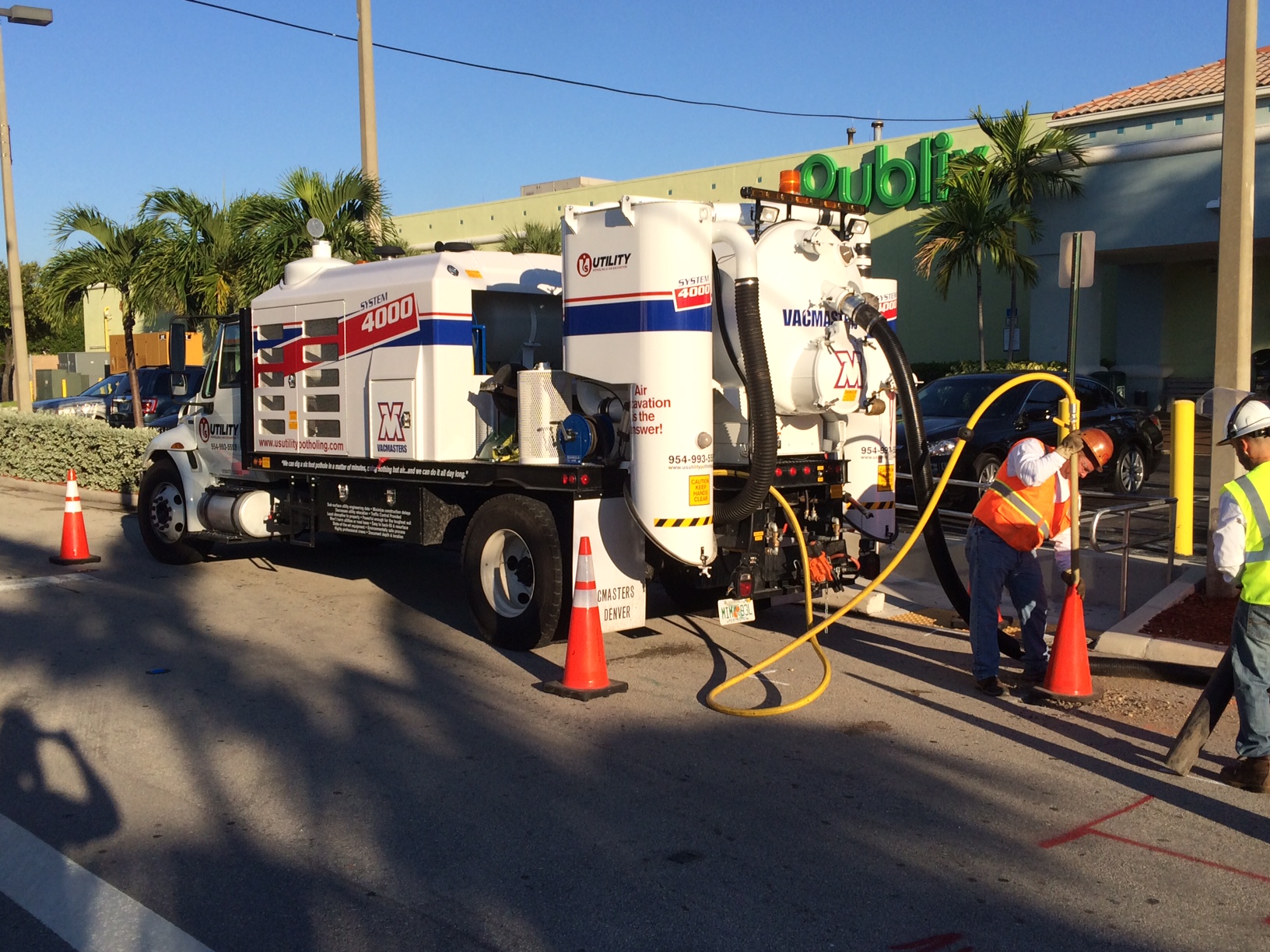
On a per-hour or per-cubic-yard basis, vacuum excavation costs more than backhoe work. A vacuum excavation truck and operator cost more per hour than mechanical equipment. A backhoe with operator costs less per hour and moves soil significantly faster. So why would you choose vacuum excavation?
The answer is risk-adjusted cost. Consider:
- Hydrovac/air excavation for 5 potholes: a fraction of a single strike
- Average utility strike repair cost: $50,000–$500,000+
- Project downtime from a strike: 1–10 days × crew + equipment day rate = $10,000–$100,000+
- OSHA fine for willful violation: Up to $156,259 per violation
- Florida statute 556 civil penalty: Up to $50,000 per violation for failure to exercise due care
The math is not close. For any project working near utilities, vacuum excavation is the lower-cost option on a risk-adjusted basis — by a wide margin. The upfront cost premium is small insurance against catastrophic downside risk.
When Traditional Excavation Methods Are Still Appropriate
Mechanical excavation is not wrong — it's wrong in the wrong place. There are many situations where backhoe and machine excavation is exactly the right tool:
- Bulk earthwork in confirmed clear zones: Once utilities have been potholed and verified, mechanical excavation can proceed in areas confirmed to be clear, maintaining required clearance from any marked utility.
- Trenching at depth away from utilities: Deep trench work in areas where no utilities are present or utilities are verified to be at significantly different depths.
- Demolition work: Where no existing utilities are present and proper disconnection/abandonment has been documented.
- New utility installation: After existing conflicts have been identified and cleared through potholing.
The most efficient projects use a combination approach: vacuum excavation for utility verification and conflict zones, mechanical equipment for bulk work in clear areas. This hybrid approach minimizes cost while maintaining safety where it matters.
Hydrovac vs. Air Excavation: Which Is Right for South Florida?
In South Florida specifically, air vacuum excavation is generally preferred over hydrovac for most utility potholing and daylighting work. Here's why:
Soil Conditions Favor Air Excavation
South Florida's soils are predominantly marine sand, oolitic limestone (particularly in Miami-Dade), and sandy fill — all of which respond very well to air excavation. These granular soils break up under air pressure efficiently, and the dry spoil vacuums cleanly into the debris tank. Hydrovac creates slurry in these soils that is difficult to manage and dispose of, and the added water is unnecessary.
Dense Urban Utility Corridors
Fort Lauderdale, Miami, Pompano Beach, Boca Raton, and other South Florida urban centers have extremely congested underground infrastructure. Air excavation is preferred in these environments because it allows precise, controlled removal of soil around multiple utilities in close proximity without the flooding effect of water under pressure.
Fiber Optic Protection
South Florida is crisscrossed with major fiber optic routes serving financial institutions, data centers, and communications infrastructure. High-pressure water from a hydrovac poses a risk of damage to fiber splice enclosures and jacket material. Air excavation eliminates that risk entirely.
Groundwater and Dewatering
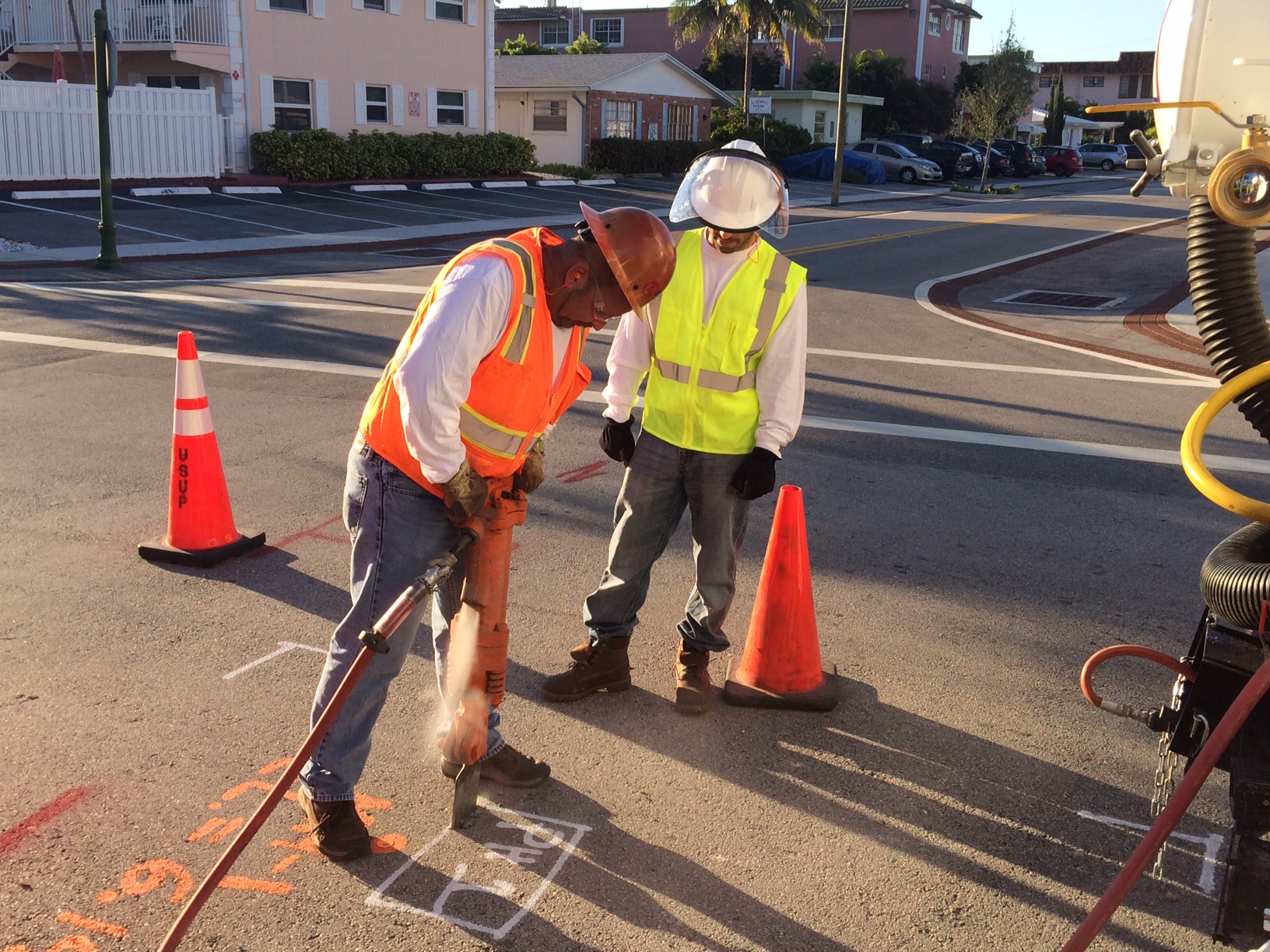
South Florida's extremely shallow water table means potholes in many areas will encounter groundwater within 18–24 inches of grade. Adding hydrovac water to an already wet excavation complicates documentation and measurement. Air excavation in wet conditions is straightforward — the vacuum removes both soil and groundwater simultaneously.
Need Non-Destructive Excavation in South Florida?
US Utility Potholing & Air Excavation specializes in air vacuum excavation and utility daylighting for contractors and engineers across Broward, Miami-Dade, and Palm Beach counties. We protect your project, your crew, and your schedule.
Get a Free Quote