What We Offer
US Utility Potholing is a vacuum excavation contractor based in Pompano Beach, serving South Florida and beyond. We dig with air and water instead of steel, so the utility comes up intact and the surface goes back the way we found it.
What we do on site:
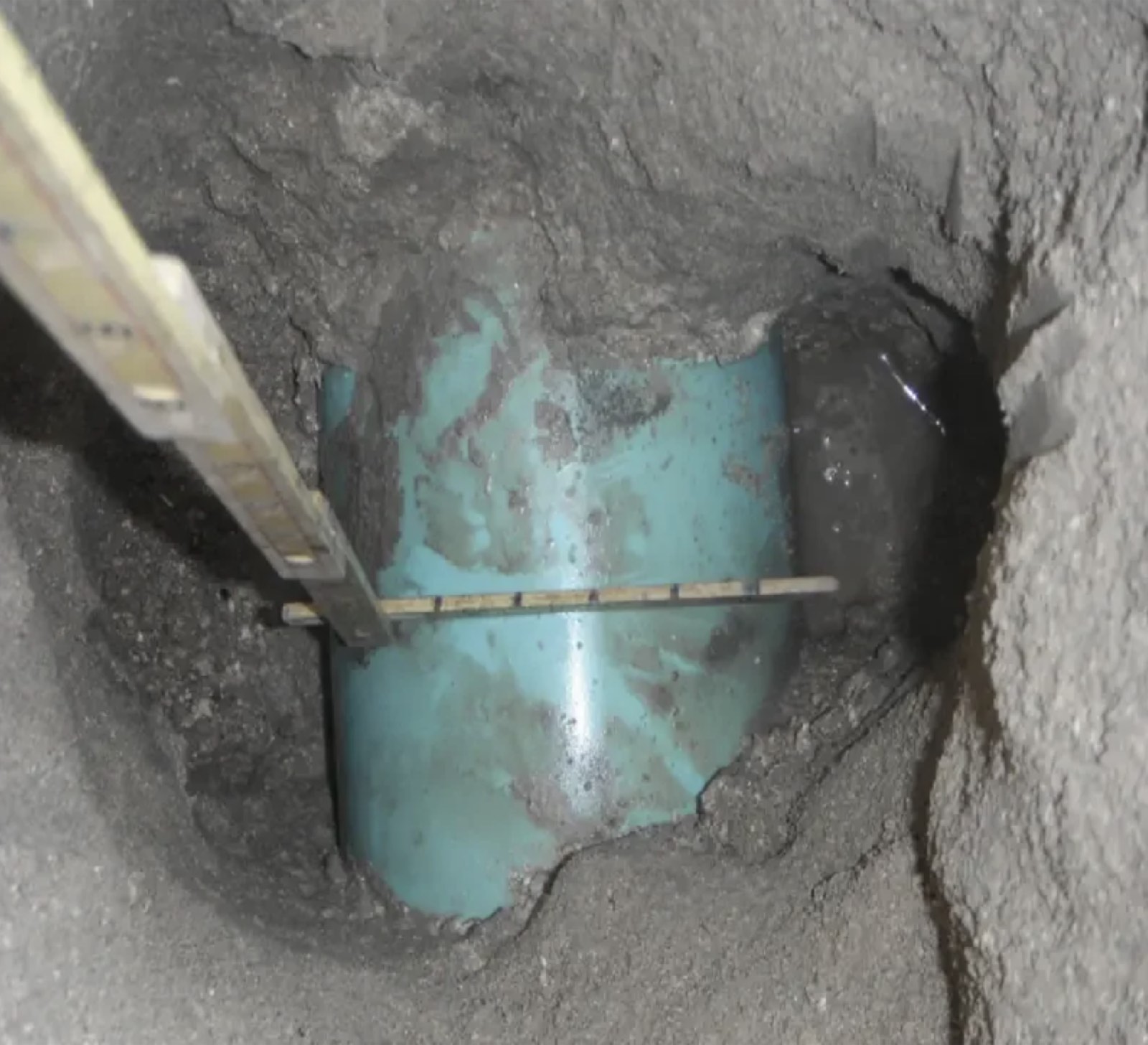
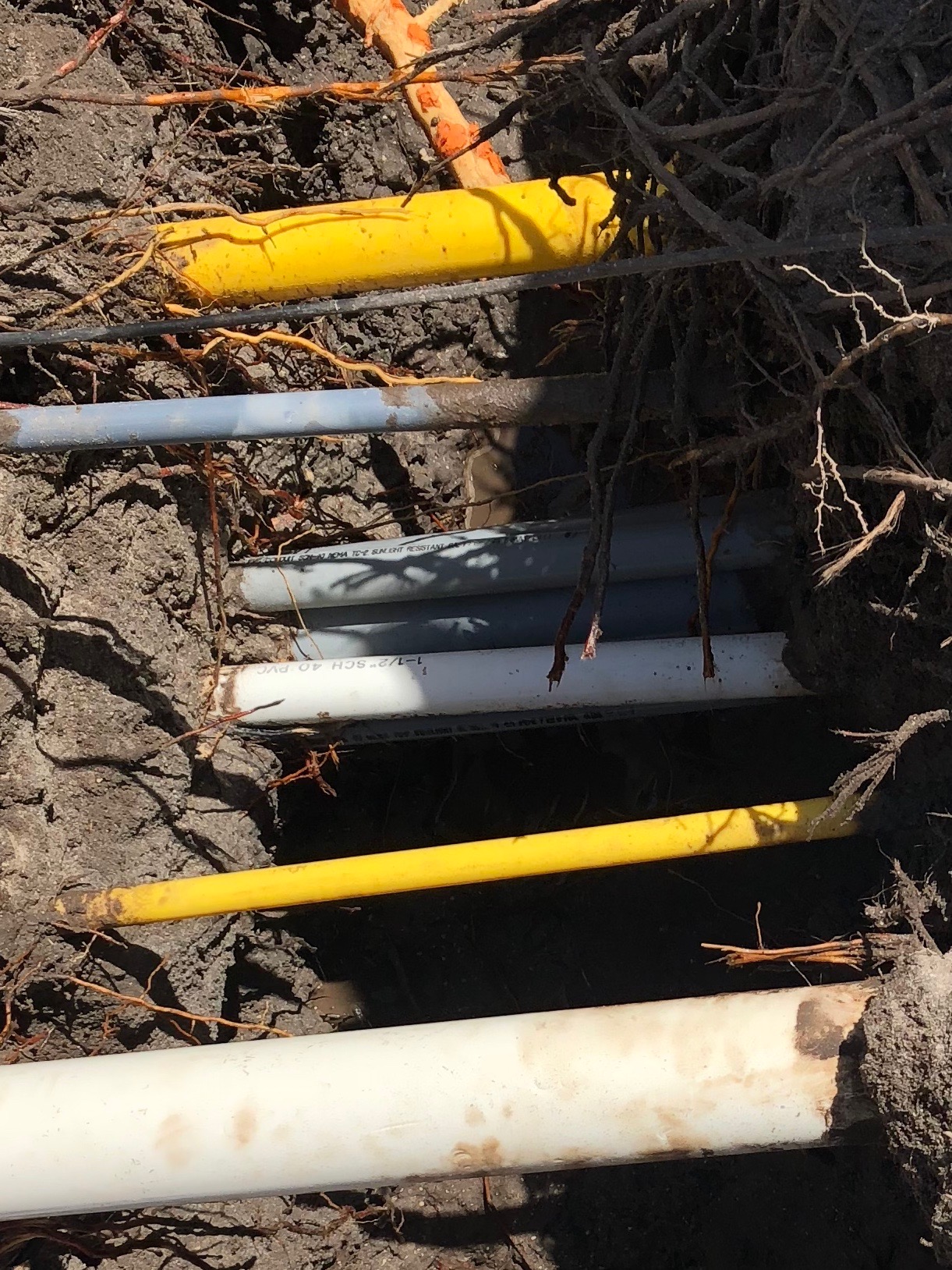
Test holes over live utilities
exposing the line to read depth, size and material.
Air excavation
compressed air and vacuum, keeping spoil dry and reusable for backfill.
Hydro excavation
pressurized water for compacted fill, coquina and hard-packed material.
Slot trenching and keyholes
narrow cuts for boring entries, tie-ins and repairs.
Pole and sign holes
clean, sized holes in congested utility corridors.
Restoration
compacted backfill and surface patched back.
What Is Vacuum Excavation (Soft Dig)?
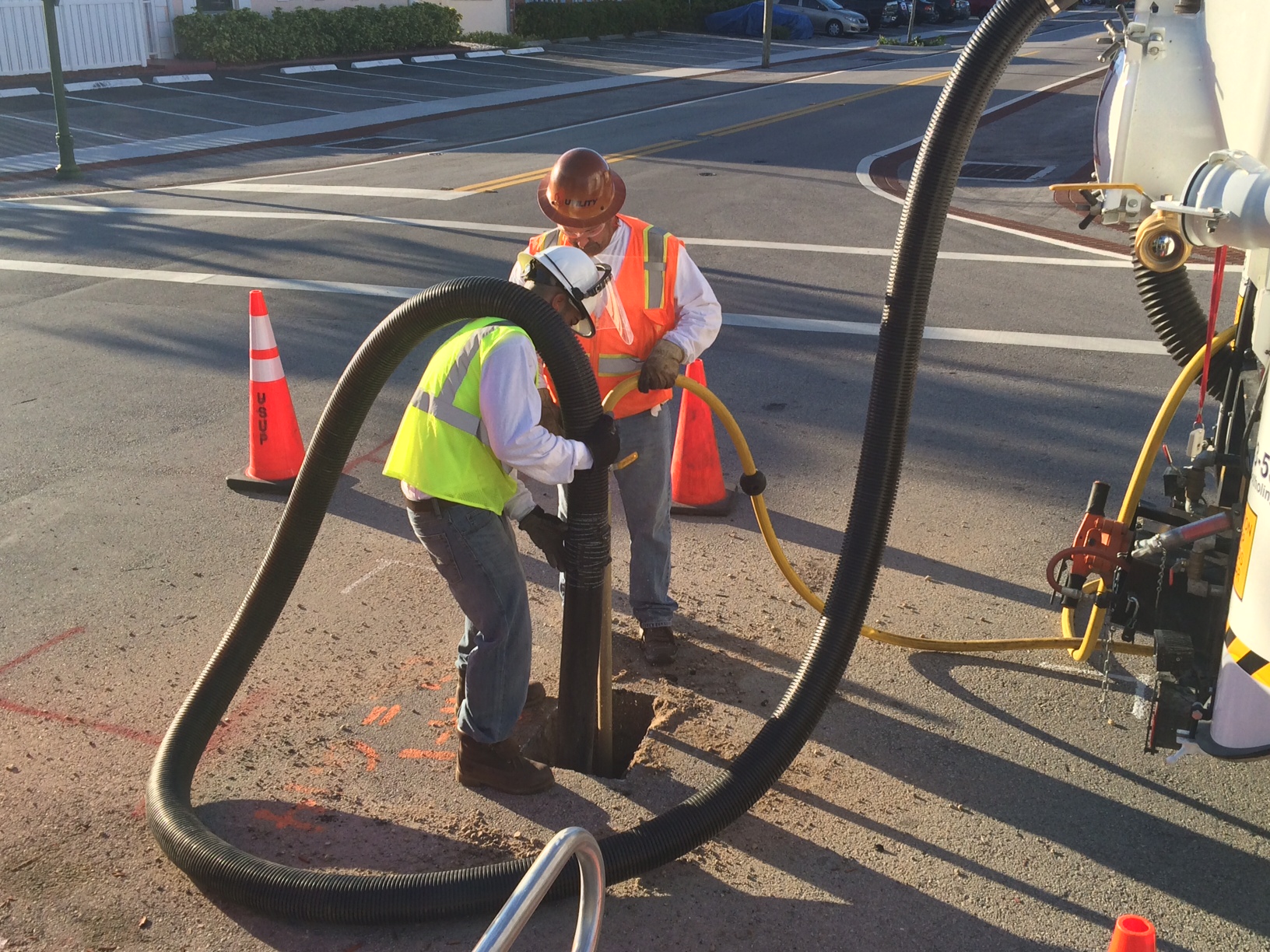
Vacuum excavation — also called soft dig, hydrovac, or vac excavation — is a non-destructive method of excavating soil around existing utilities using either pressurized water (hydrovac) or compressed air to break up soil, combined with a powerful vacuum system that removes the spoil. The result is a precisely controlled excavation that exposes buried utilities without the risk of mechanical damage from conventional backhoe or hand-digging methods.
When you need to expose a live electrical line, gas main, water main, or communication duct in a tight urban corridor, soft dig vacuum excavation is the only method that provides both speed and safety. It is the industry-standard approach for utility potholing and daylighting in South Florida's active construction market.
US Utility Potholing operates vacuum excavation services throughout South Florida using two primary methods, matched to project conditions and site access requirements.
Our Two Vacuum Excavation Methods
Vac Truck (Hydrovac) Method
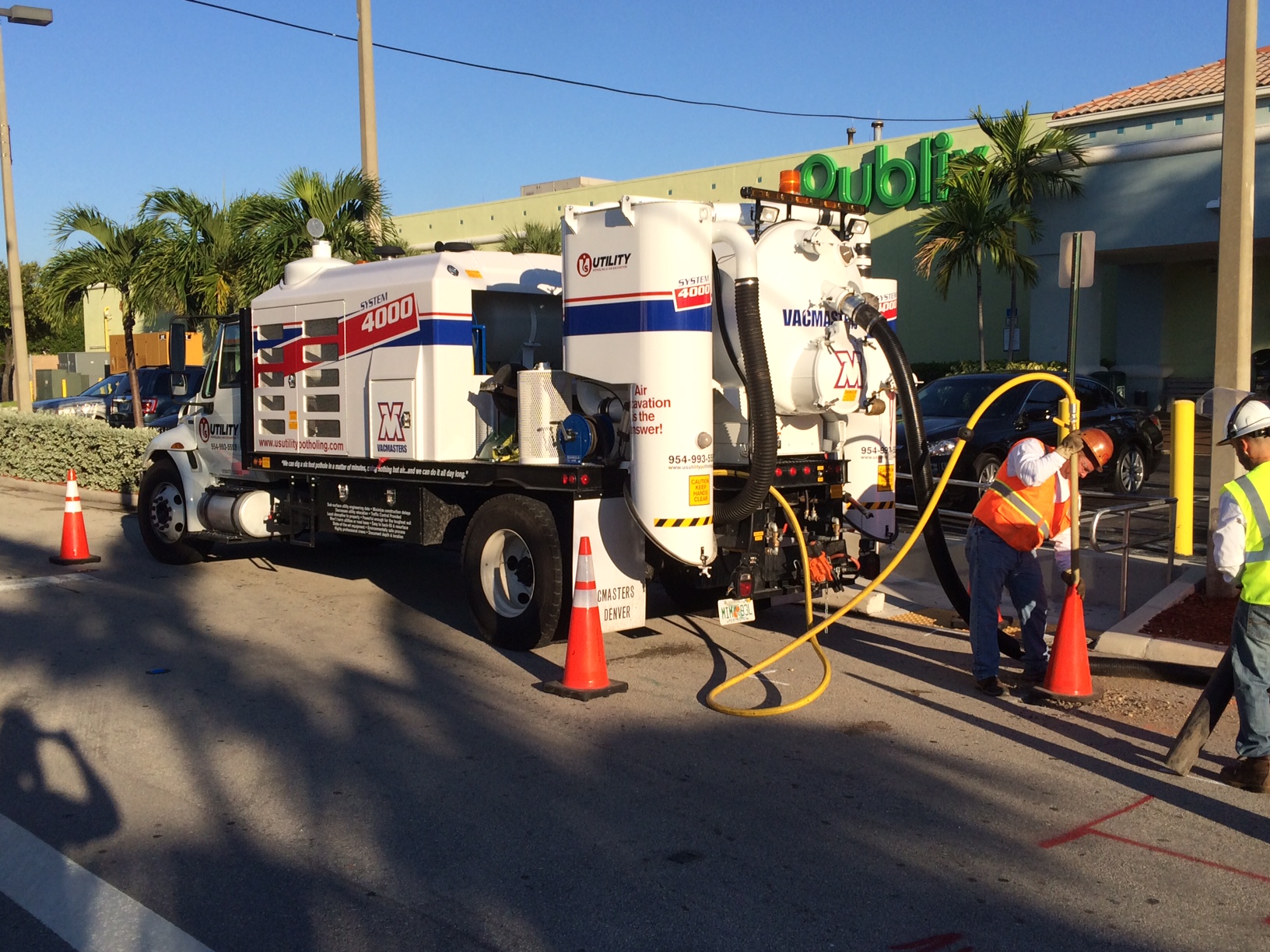
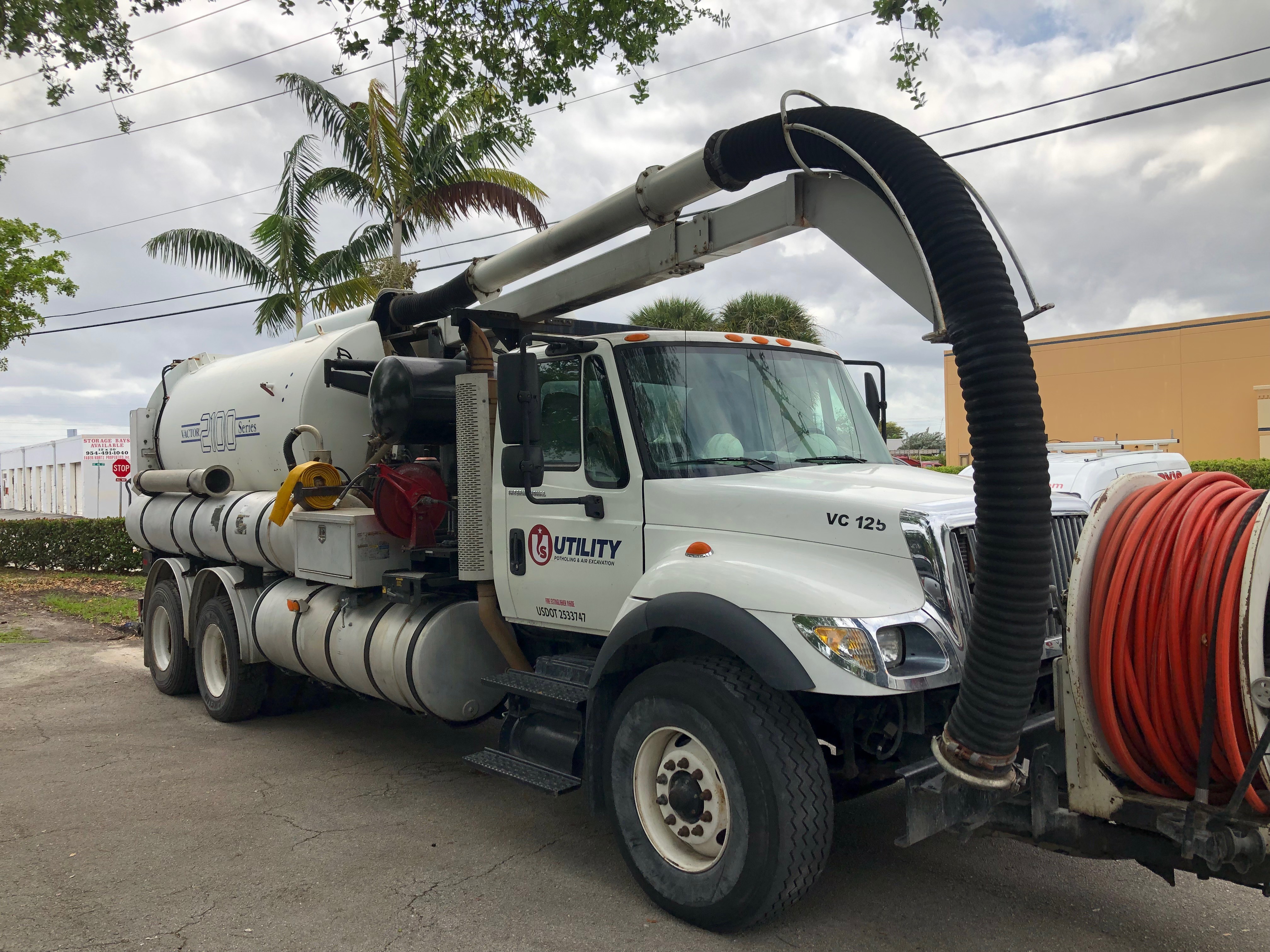
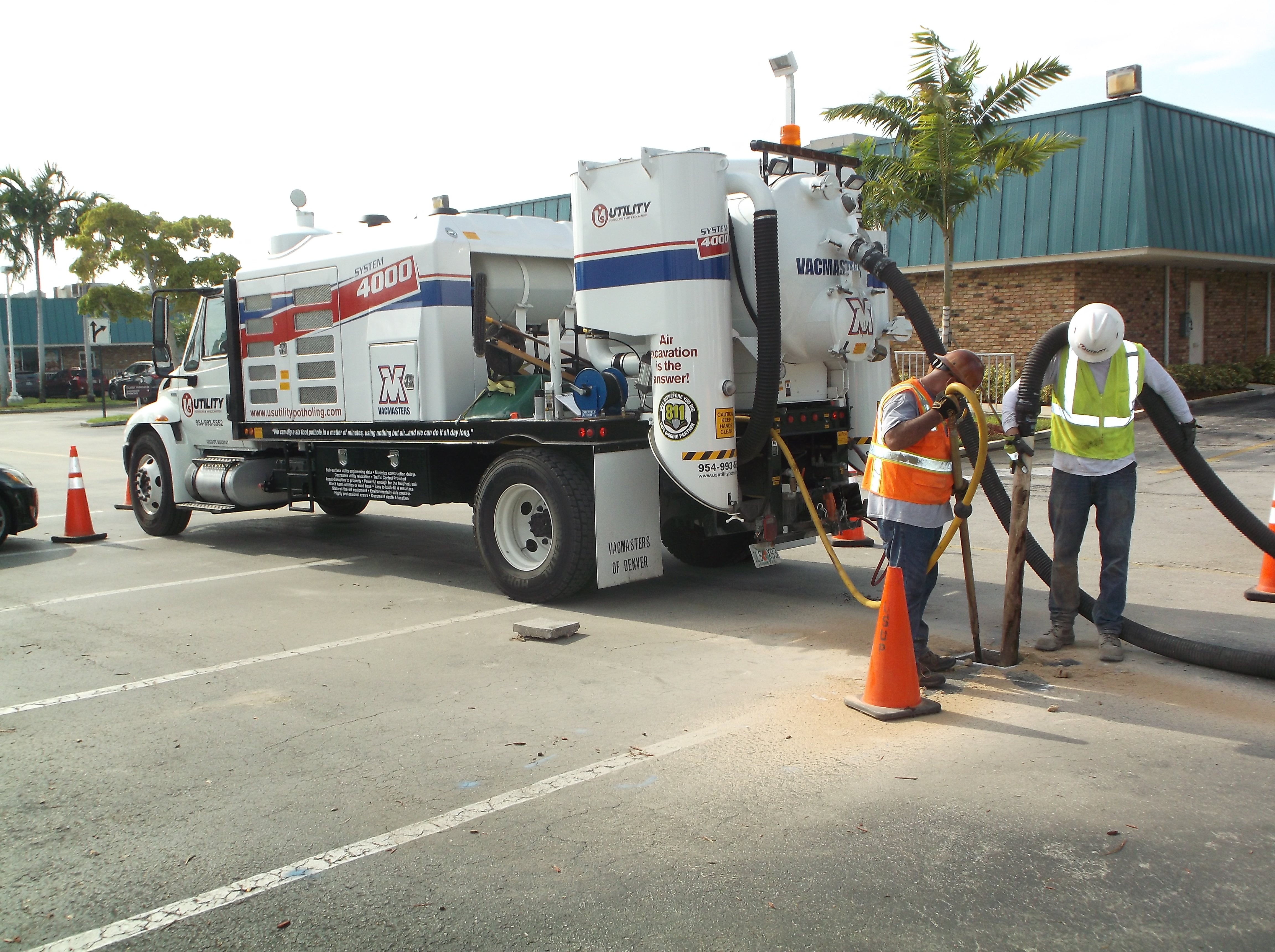
Our vacuum excavation truck (vac truck) combines a high-pressure water system with a debris tank and powerful vacuum. High-pressure water jets break up compacted soil and native material while the vacuum simultaneously removes the slurry into an onboard tank for disposal or reuse. The vac truck method is ideal for:
- Larger excavation areas requiring significant material removal
- Projects in South Florida's sandy and mixed-soil environments
- Congested ROW work in Broward and Miami-Dade urban corridors
- High-volume potholing programs with multiple test holes per mobilization
- Situations requiring contained spoil for environmental compliance
Barrel / Air Compressor Method
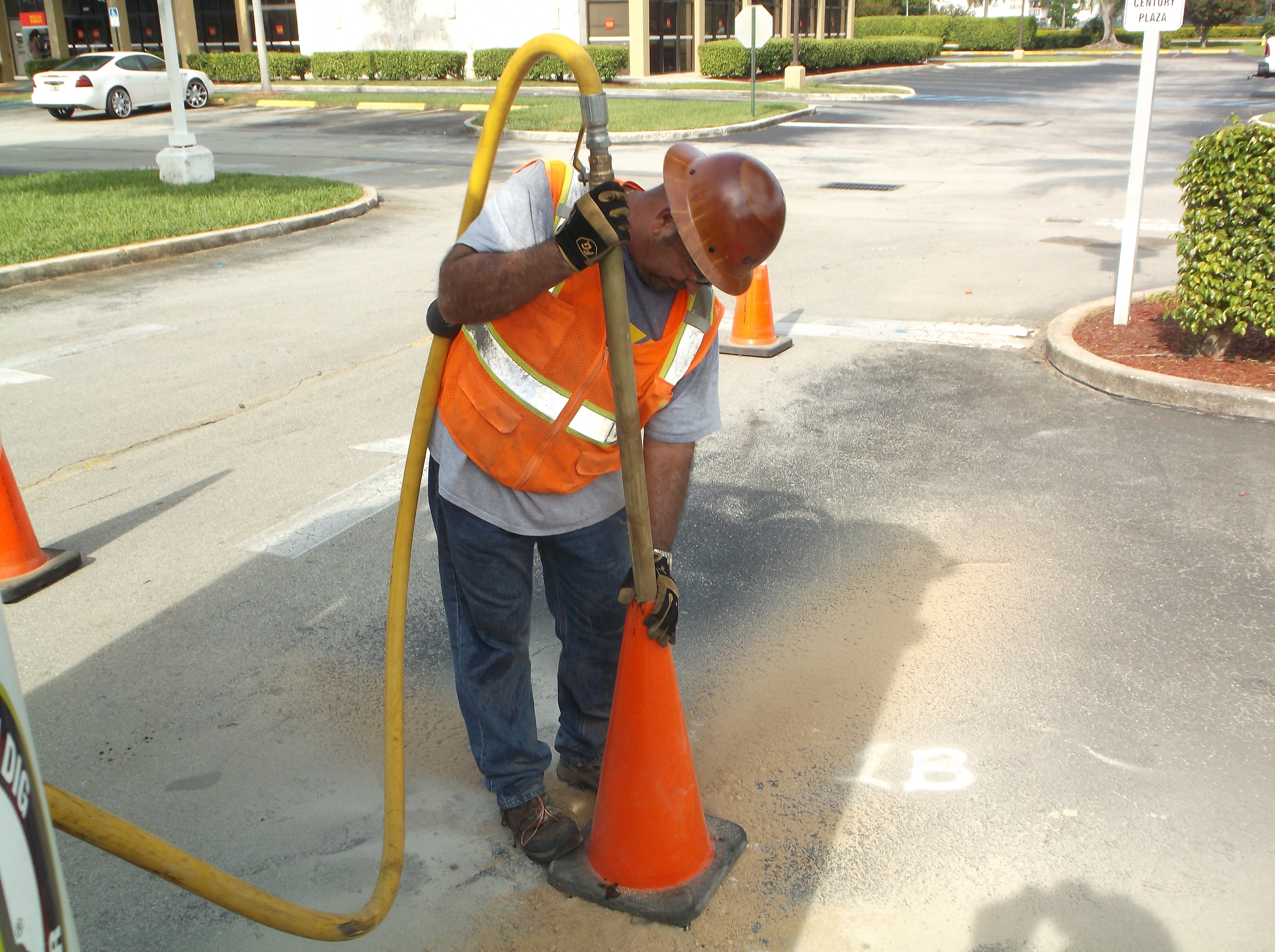
Our barrel and air compressor soft dig method uses compressed air to break up soil around utilities, with a vacuum collection system drawing spoil into portable containers. This method offers distinct advantages in specific field conditions:
- Access-constrained sites where a full vac truck cannot maneuver
- Interior or covered locations — parking garages, building interiors, covered structures
- Environments where water introduction is restricted (near electrical infrastructure)
- Smaller test hole programs requiring precision over volume
- Projects where spoil reuse on-site is preferred
Soft Dig / Soft Digging Excavation in South Florida
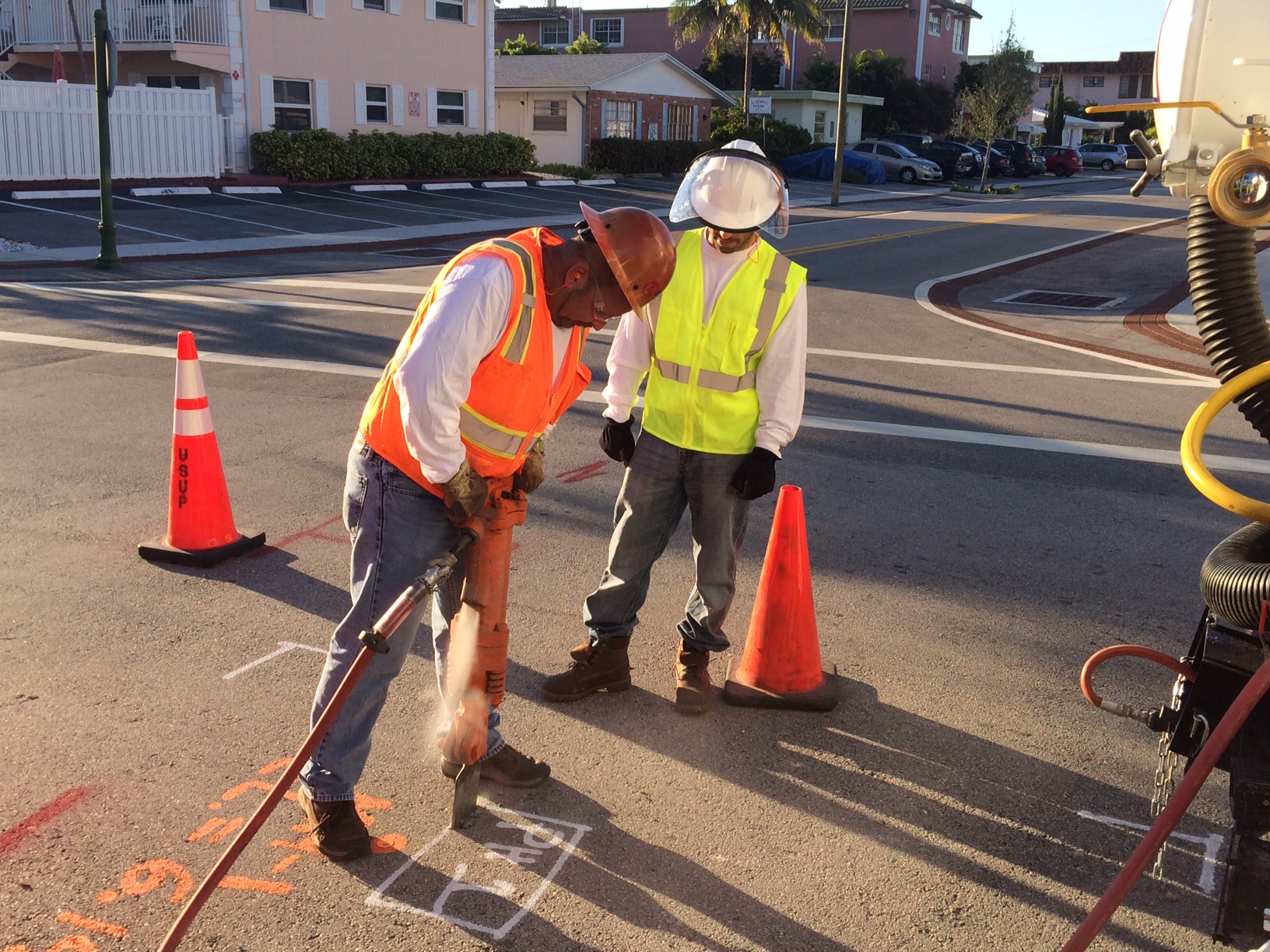
Soft dig — also written as soft digging excavation — is the preferred non-destructive method for exposing live underground utilities wherever mechanical excavation would create an unacceptable risk of damage. Soft dig vacuum excavation combines either pressurized water or compressed air to break up soil, with a vacuum system to remove it cleanly and quickly. For electrical utilities, gas mains, and communication lines in South Florida's dense urban corridors, air vacuum excavation is particularly valuable because it eliminates the risk of water intrusion near energized electrical infrastructure. Our crew has performed hundreds of soft dig operations across Broward, Miami-Dade, and Palm Beach counties — from single test holes at construction crossings to multi-day programs supporting large-scale utility relocation and installation projects. If your project requires safe, efficient, non-destructive soil removal around existing utilities, our soft digging excavation services are the answer.
Where Vacuum Excavation Is Used in South Florida
General contractors, civil engineers, municipalities, and utility companies across Broward, Miami-Dade, and Palm Beach counties call us for vacuum excavation when conventional excavation around live utilities is too risky. Common applications include:
- Utility potholing and daylighting: Exposing utilities to verify depth and clearance before new construction crosses existing lines.
- Pipeline and conduit repairs: Safely exposing damaged utilities for repair crews without endangering adjacent infrastructure.
- Foundation and pile work: Clearing utility conflicts near new foundation systems, caissons, and helical piers.
- Electrical utility work: Exposing underground electrical infrastructure for private power companies performing maintenance and upgrades.
- Directional boring support: Pre-bore and exit-pit excavation for HDD contractors working in utility-dense South Florida corridors.
- Sign and pole installation: Safe excavation for new sign foundations and light pole bases near buried utilities.
- Emergency utility exposure: Rapid mobilization for utility strikes and emergency repair situations requiring immediate excavation around live infrastructure.
Why Soft Dig Protects Your Project and Your Liability
Mechanical excavation near live utilities in South Florida is an OSHA violation waiting to happen. A single backhoe bucket strike on an energized electrical line or a pressurized gas main can result in fatalities, project shutdowns, regulatory investigations, and claims that exceed the entire project value. Municipalities and engineering firms increasingly mandate non-destructive excavation methods as a permit condition in utility-dense areas of Broward County, Miami-Dade, and Palm Beach County.
Vacuum excavation gives your crew a safe working environment, gives your project a documented record of careful utility exposure, and keeps your schedule moving. Combined with our private utility locating and GPR scanning services, soft dig excavation is the complete solution for working safely near underground utilities anywhere in South Florida.
Vacuum Excavation FAQ
Related services: hydrovac and hydro excavation · soft dig excavation methods · daylighting buried utilities · the complete service list
What Are Soft Dig Services?
Soft dig is an umbrella term for non-destructive excavation methods that use pressurized air or water — rather than steel teeth or mechanical blades — to safely expose underground utilities and remove soil, replacing traditional excavation methods that risk damaging underground infrastructure. The two primary soft dig methods are air excavation and hydrovac (hydro excavation). Both use a powerful vacuum system to extract loosened soil into a debris tank, leaving buried utilities fully intact and exposed for inspection, measurement, or repair.
Soft dig services are used anywhere underground utilities must be located, exposed, or worked around without the risk of a mechanical strike. Applications include utility potholing and daylighting, slot trenching alongside active lines, foundation pier excavation near utilities, and vacuum excavation for new utility installation in congested corridors.
At US Utility Potholing & Air Excavation, soft dig is the foundation of everything we do. Our crews are trained in both air excavation and hydrovac methods and deploy the right technique for your soil conditions, utility type, and project requirements throughout South Florida.
Why Choose Soft Dig Over Mechanical Excavation?
Mechanical excavation — backhoes, excavators, trenchers — is fast and cost-effective for moving large volumes of dirt in open areas. But when buried utilities are present, mechanical equipment becomes a liability. Utility strikes cause project shutdowns, repair costs, liability claims, and in the case of gas and electrical lines, serious safety incidents.
Utility Safety and Damage Prevention
Soft dig eliminates the risk of utility strikes by removing soil one layer at a time with controlled pressure. The excavation nozzle can be positioned within inches of a buried pipe or cable and will expose it cleanly rather than cutting through it. This is not possible with any mechanical excavation method.
OSHA Requirements
OSHA 29 CFR 1926 Subpart P governs excavation safety and requires that workers be protected from underground utility hazards during trenching and excavation operations. The standard mandates that utilities be located before excavation begins and that hand digging or an acceptable alternative method be used within the tolerance zone around marked utilities. Soft dig satisfies these requirements while being many times faster than hand digging and far safer than mechanical excavation in congested utility corridors.
Florida's Underground Facility Damage Prevention and Safety Act (Chapter 556) requires excavators to use hand digging or a mechanically equivalent method within 18 to 24 inches of a marked utility. Soft dig is the recognized industry-standard mechanical equivalent.
Permit and Utility Owner Requirements
Many utility owners, permit authorities, and project specifications now explicitly require non-destructive excavation methods within defined clearance zones. FDOT projects, county ROW permits, and utility franchise agreements increasingly specify soft dig as the required excavation method near existing infrastructure. Using soft dig from the start ensures compliance and avoids stop-work orders.
Soft Dig Applications
Utility Exposure and Daylighting
The most common soft dig application is exposing a buried utility at a specific point to verify its location, depth, size, and material. This is also called daylighting or potholing. Soft dig daylighting is used for ASCE 38-22 Quality Level A data collection, pre-bore clearance verification for horizontal directional drilling, and design conflict resolution. See our dedicated utility potholing page for more detail.
Slot Trenching Around Active Utilities
Slot trenching with soft dig equipment creates a narrow, precise trench alongside or across active utility lines — for new pipe installation, tie-in connections, or utility repair access — without threatening adjacent infrastructure. Soft dig slot trenching is used in utility corridors where standard trenching equipment would put existing lines at risk.
New Utility Installation in Congested Corridors
Installing new water, sewer, electrical, or telecommunications infrastructure in areas with high existing utility density requires precision. Soft dig allows crews to open a trench for new construction while constantly monitoring for and avoiding conflicts with existing buried lines — something that cannot be done safely with a backhoe.
Foundation and Pier Excavation Near Utilities
Building foundations, sign poles, light pole bases, and bridge abutments near underground utilities require careful excavation in the immediate vicinity of buried infrastructure. Soft dig allows these pier holes and footings to be opened without risk to adjacent utilities.
Air Excavation vs. Hydrovac — Which Is Right for Your Project?
Air Excavation (Air Lance)
Air excavation uses high-pressure compressed air delivered through a hand-held lance to break up and loosen soil. The displaced soil is extracted by a vacuum hose into a debris tank. Air excavation is the preferred method in South Florida for most soft dig work because:
- South Florida's sandy, granular soils respond extremely well to air pressure and require less energy to displace
- The excavation area remains dry, which is essential when working near moisture-sensitive utilities such as fiber optic cables, telecommunications infrastructure, and direct-buried electrical conduit
- Air excavation leaves a clean, visible work surface that is easy to photograph and document for potholing records
- There is no water to manage on site, simplifying cleanup and reducing environmental concerns near water bodies and wetlands
Hydrovac (Hydro Excavation)
Hydrovac uses a high-pressure water stream to cut through soil, with the resulting slurry extracted by vacuum. Hydrovac is more effective than air excavation in hard, compacted soils, clay layers, and rocky ground conditions that air pressure alone cannot break up efficiently. It is also the preferred method for larger volume excavations, deep exposures, and frozen ground (less relevant in South Florida). Hydrovac is commonly used for:
- Deep utility exposures below 8 to 10 feet where air pressure diminishes
- Compacted clay or marl layers common in parts of Miami-Dade County
- High-volume slot trenching for new utility installation
- Exposures where water is not a concern for the target utility type
Our team will assess your project conditions and recommend the most appropriate method. On many projects, both methods are used — air excavation for sensitive utility exposures and hydrovac for volume removal.
South Florida Ground Conditions and Soft Dig
South Florida's geology makes soft dig both highly practical and especially important. The region is underlain primarily by oolitic limestone and sandy fill soils that are easy to air-excavate and respond well to soft dig methods. However, the same geology creates conditions that make undocumented and mislocated utilities common:
- High water tables mean utilities are often installed as shallow as possible, creating dense multi-utility corridors within the top three to six feet of soil
- Decades of development have layered telecommunications, water, sewer, electrical, gas, and stormwater infrastructure in close proximity with limited as-built documentation
- Corrosion is accelerated in South Florida's high-moisture, salt-influenced soils, meaning older utilities may be in unexpected condition when exposed
- The flat topography and high density of developed land means utility conflicts are especially common near roads, intersections, and rights-of-way
These conditions make mechanical excavation near utilities especially hazardous in South Florida — and make soft dig the prudent, professional choice for any project where utilities may be present. The benefits of soft digging extend beyond safety — soft dig preserves underground infrastructure integrity and keeps excavation projects on schedule by eliminating the delays and liabilities caused by utility strikes. We serve Broward, Miami-Dade, and Palm Beach counties from our base in Pompano Beach. Contact us to discuss your project or call (954) 849-2859 for a fast quote.