"Daylighting" is a term that comes up frequently in construction specifications, utility engineering reports, and pre-dig safety requirements — but it's not always clearly defined. If you've encountered this term and need a plain-language explanation, this guide covers everything you need to know: what daylighting means, how it's done, when it's required by regulation or contract, and how it's applied on real construction projects in South Florida.
Daylighting Definition: What Does It Mean in Excavation?
In the context of excavation and underground utilities, daylighting means exposing a buried utility by carefully excavating down to it — bringing it into direct view at or near the surface, literally "in the daylight." The goal is to physically confirm the utility's exact depth below grade, pipe diameter, material type, and horizontal position by direct observation rather than relying on electronic instruments or records alone.
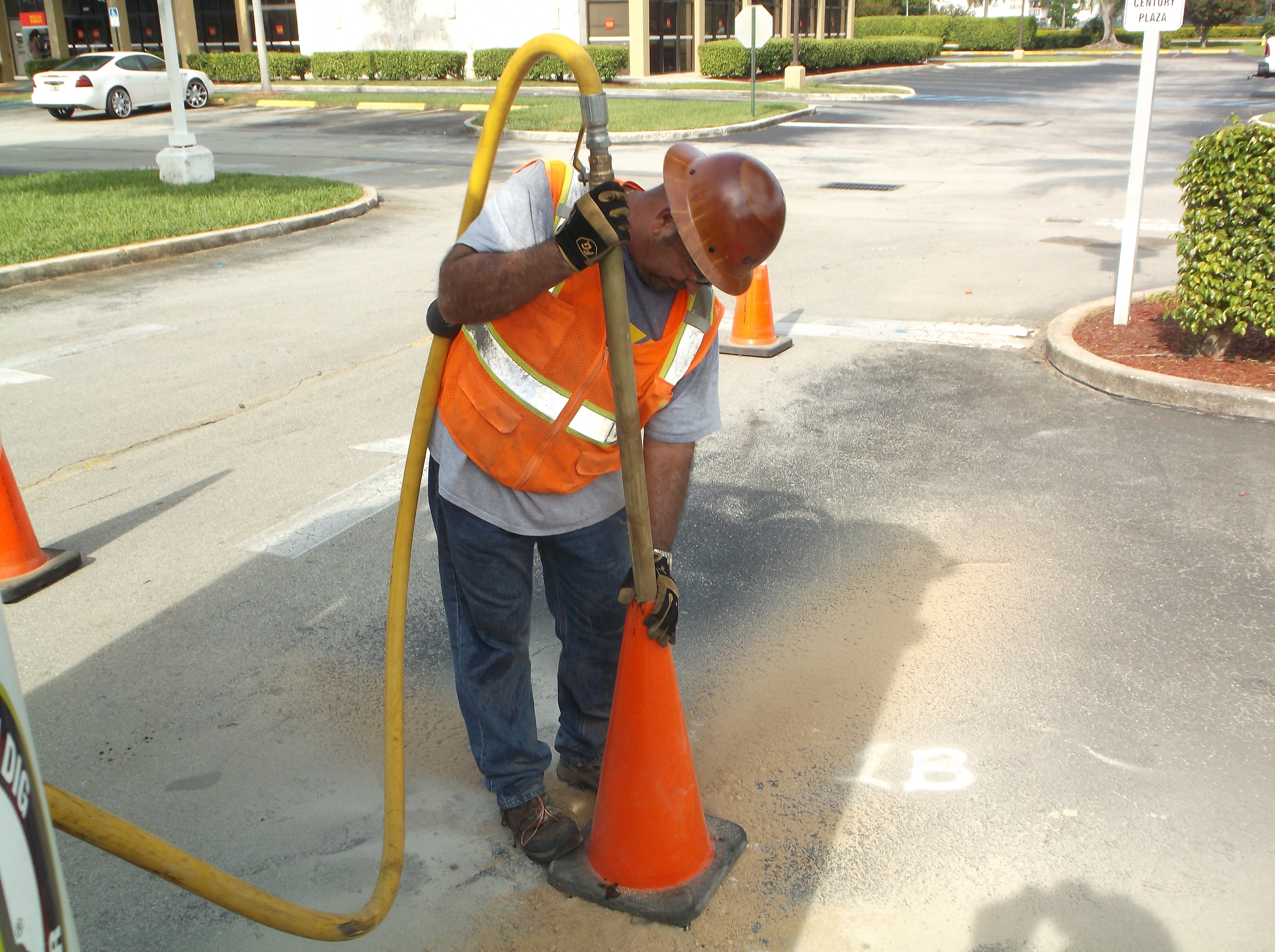
Daylighting is performed using vacuum excavation — either air excavation (compressed air and vacuum) or hydrovac (high-pressure water and vacuum). These non-destructive methods remove soil without the grinding, cutting, or impacting forces of mechanical excavation, making it safe to excavate directly over or around a live utility.
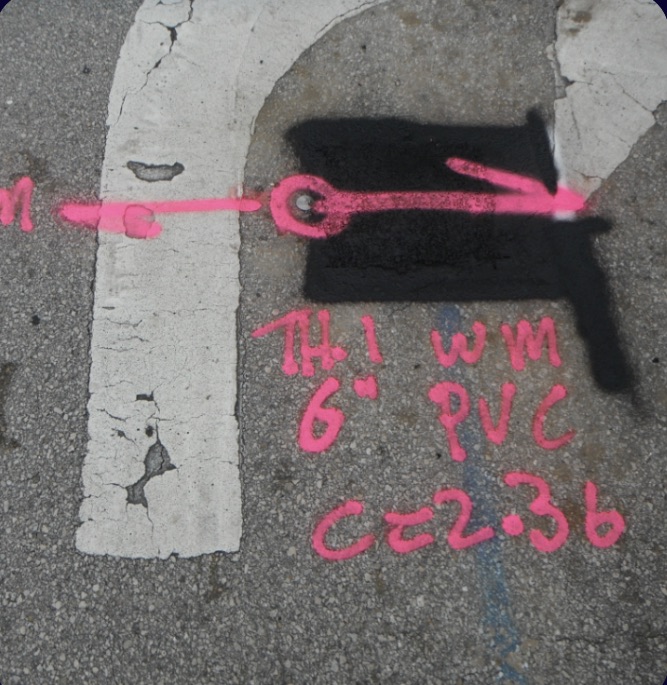
Once the utility is exposed, a technician measures its top elevation, records pipe diameter and material, photographs the exposure, and typically places a survey stake or GPS point for accurate spatial documentation. The excavation is then backfilled and the surface restored.
Daylighting vs. Potholing: The Same Process, Different Names
Daylighting and potholing are the same activity. The distinction is purely terminological:
- Daylighting is the term more commonly used in engineering standards, utility owner specifications, and FDOT documentation. It emphasizes the result — the utility is visible.
- Potholing is the term more commonly used in field operations and contractor parlance. It emphasizes the method — you dig a pothole-shaped opening.
You may also see "test pit," "exploratory excavation," or "vacuum excavation verification" used in different project documents. All of these refer to the same physical investigation process.
Why Daylighting Is Required Before Construction Near Utilities
The most common question is: "We already called 811 — why do we need to daylight?" The answer involves understanding what 811 does and does not provide.
The Limits of 811 and Electromagnetic Locating
Florida's Sunshine State One Call (811) system notifies member utilities to mark their lines before excavation. This is legally required and a critical first step. However, 811 locating has significant limitations:
- It marks approximate horizontal position only — no depth information is provided
- The tolerance zone (FDOT standard: 18 inches either side of the mark) means a utility could be anywhere within a 36-inch horizontal corridor
- Coverage is limited to member utilities — private laterals, on-site utilities, and non-member facilities are not marked
- Older records are often inaccurate; as-built drawings in South Florida can be off by feet, not inches
- Electronic locating cannot confirm depth with precision, and non-conductive utilities (PVC, HDPE) may not be detectable at all
Daylighting removes all of this uncertainty. Once you've physically seen and measured a utility, you know exactly where it is — no interpretation required.
ASCE 38-22 Quality Level A: The Gold Standard
The American Society of Civil Engineers Standard Guideline 38-22 (ASCE 38-22) is the industry standard for classifying the quality and confidence level of subsurface utility data. It defines four quality levels:
- QL-D: Information derived from existing utility records only. Lowest confidence; often inaccurate.
- QL-C: Field survey of visible surface features (manholes, valve boxes, utility markers). Better, but provides no depth data.
- QL-B: Surface geophysics — electromagnetic locating and/or GPR. Provides two-dimensional position (horizontal) with estimated depth. Most private utility locating work falls here.
- QL-A: Physical verification by daylighting or potholing. Confirms three-dimensional position — horizontal location AND confirmed depth measured directly at the utility. Highest confidence level.
QL-A is the only data classification that eliminates depth uncertainty. For any construction project where a proposed element will cross or closely parallel an existing utility, QL-A daylighting at those crossing points is the only way to design and build with confidence.
Many project owners — FDOT, municipal utilities, transit agencies, major utility companies — now explicitly specify QL-A data requirements in their engineering standards. Design-build and EPC contractors often require it as a matter of risk management, even when the owner doesn't specify it.
Methods of Daylighting: Hydrovac vs. Air Excavation
Hydrovac Daylighting
Hydrovac uses a pressurized water stream to break up soil and a simultaneous vacuum to remove the resulting slurry. It's highly effective in clay, compacted fill, and other cohesive soils that resist air excavation. The primary considerations:
- Generates wet slurry spoil that must be transported and disposed of off-site
- Water pressure must be carefully managed near sensitive utilities — excessive pressure can damage PVC pipe or erode bedding material
- Not preferred near energized electrical equipment or splice vaults
Air Vacuum Daylighting
Air excavation uses compressed air delivered through an air lance to break up and fluidize soil, with simultaneous vacuum removal. In South Florida's predominantly sandy soils, air excavation is typically the method of choice:
- Sandy soils break up efficiently under air pressure — faster than hydrovac in most South Florida conditions
- Dry excavation — no water introduced, no slurry to manage, and spoil (dry sand) can often be reused for backfill
- Safe near all utility types including fiber optics, energized conduits, and gas lines
- Cleaner work environment with less site impact
Florida Regulations: What the Law Requires
Florida Statute 556 requires notification of Sunshine State One Call (811) at least two full business days before any excavation. This is the legal minimum. However, the statute also places responsibility on the excavator to use reasonable care when excavating within the tolerance zone of a marked utility — which in practice means hand digging or vacuum excavation, not mechanical equipment.
For FDOT projects, the FDOT Design Standards and Standard Specifications for Road and Bridge Construction reference utility conflict identification and often specify daylighting at design crossings for major infrastructure projects. Utility owners such as FPL, TECO/Peoples Gas, AT&T, and water utilities may also require daylighting under their own facility protection standards before approving construction permits near their infrastructure.
Common Applications of Daylighting in South Florida
Pre-Construction Utility Investigation
Before breaking ground on a new commercial building, roadway improvement, or utility installation, daylighting at key conflict points verifies that proposed grades and elevations won't create utility conflicts during construction. It's far cheaper to daylight and redesign a crossing in the office than to encounter a problem in the field.
Utility Relocation Projects
When existing utilities must be relocated to accommodate new construction, daylighting confirms as-built conditions before relocation design is finalized. South Florida's rapid development — particularly in Broward County, Miami-Dade, and the Boca Raton corridor — means utility relocation is a constant feature of major projects.
Horizontal Directional Drilling (HDD) Crossings
HDD bores must be designed to maintain adequate clearance from crossing utilities. Daylighting at bore alignment crossings provides the depth data needed to set bore grade and avoid interference.
Emergency Utility Repair
When a utility shows signs of failure and excavation is needed for repair, daylighting is used to safely expose the utility before heavy equipment is brought in for the actual repair work.
Need Daylighting Services in South Florida?
US Utility Potholing & Air Excavation provides QL-A daylighting and potholing services for engineers, contractors, and utility owners throughout Broward, Miami-Dade, and Palm Beach counties. We deliver accurate depth data, photos, and field documentation with every pothole.
Get a Free QuoteFrequently Asked Questions
What does daylighting mean in excavation?
In excavation, 'daylighting' means exposing a buried utility by carefully excavating down to it so it becomes directly visible at or near the surface — literally brought into daylight. It is performed using non-destructive vacuum excavation (air or hydrovac) to safely uncover the utility without damaging it. The exposed utility can then be measured and documented for depth, size, material, and exact position.
Is daylighting the same as potholing?
Yes. Daylighting and potholing are the same process — two different terms for physically exposing a buried utility by vacuum excavation. 'Daylighting' is more commonly used in engineering and utility owner specifications, while 'potholing' is more common in field and contractor language. Both refer to the ASCE 38-22 Quality Level A investigation method.
Is daylighting required before construction?
Daylighting is required on many construction projects wherever proposed work will cross or come close to an existing buried utility. Florida law requires an 811 call before any digging, but 811 only covers member utilities and does not provide physical depth data. Engineering specifications — especially on FDOT, municipal, and utility owner projects — commonly require daylighting at design utility crossings to confirm depths and avoid strikes.
What is ASCE 38-22 Quality Level A?
ASCE 38-22 Quality Level A (QL-A) is the highest level of certainty for subsurface utility data, achievable only through physical exposure (daylighting or potholing). QL-A data includes confirmed three-dimensional position — horizontal location and confirmed depth — measured directly at the utility. It provides the highest confidence for design and construction decisions near buried utilities.