What Is Utility Verification?
Utility verification is the process of confirming the location, depth, and identity of underground utilities before construction, excavation, or boring work begins. It goes beyond simply calling 811 or relying on utility record drawings — which are frequently inaccurate, incomplete, or outdated in South Florida's mature construction market. Professional utility verification uses multiple detection methods in sequence to build a progressively more accurate and complete picture of what's underground.
The goal of utility verification is simple: eliminate the uncertainty about underground conditions before your crew starts digging, boring, or core drilling. Utility strikes are not just expensive — they are dangerous. A struck gas main, high-voltage electrical duct bank, or pressurized water main can injure workers, destroy equipment, shut down a project for days, and expose your company to significant liability. Utility verification prevents strikes before they happen.
The Three-Step Utility Verification Process
A thorough utility verification program in South Florida typically follows a three-step progression, moving from surface investigation to physical confirmation:
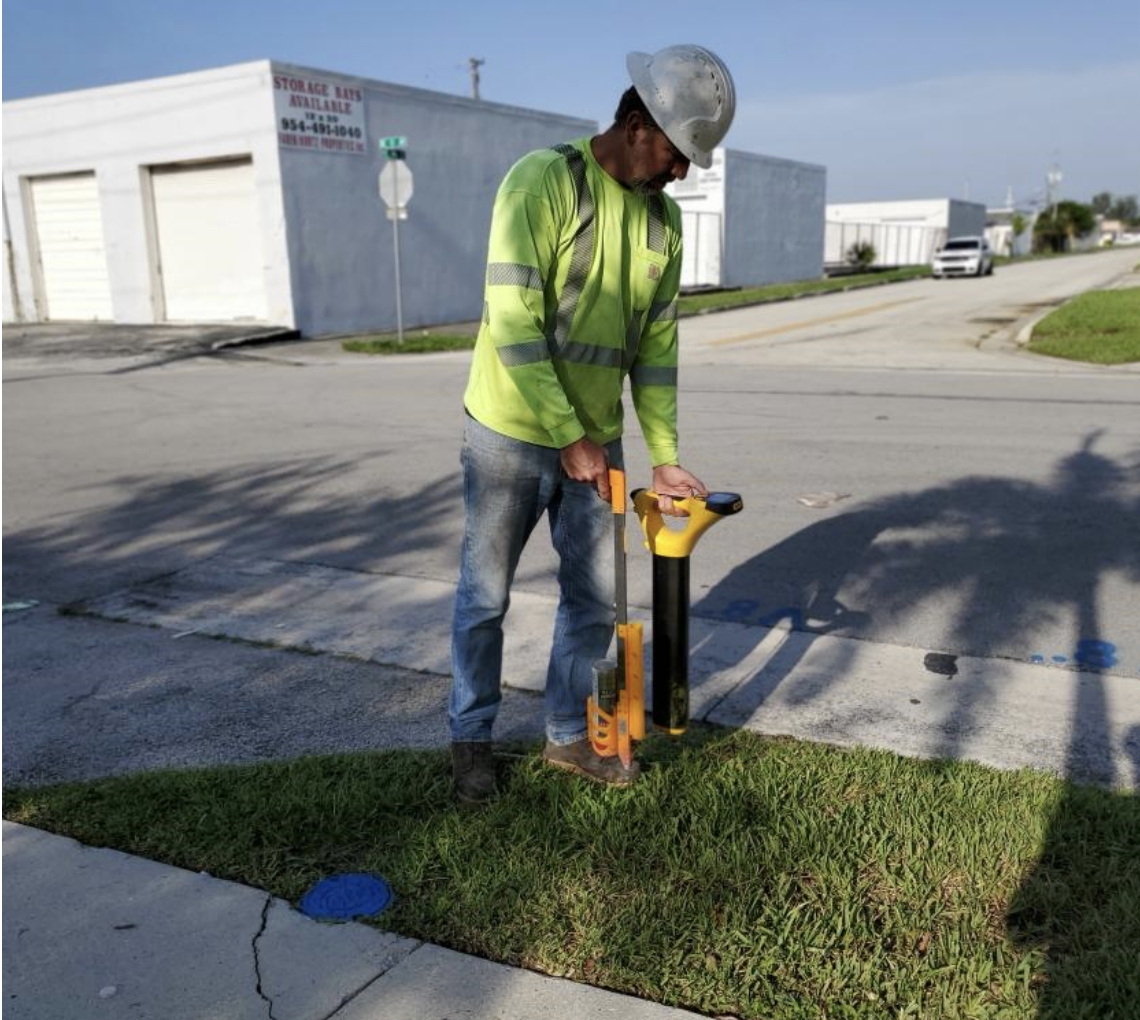
Step 1 — Electromagnetic (EM) Locating
The first step is electromagnetic locating to trace all conductive utilities across the project area. EM locating uses radio frequency signals to energize underground conductors — metal pipes, electrical conduit, communication cables — and then detects the resulting electromagnetic field at the surface to trace the utility's path. This step identifies and marks the route of metallic utilities including gas lines, electrical duct banks, water mains with tracer wire, and communication conduit with metallic sheathing.
EM locating also includes the 811-marked public utilities in the area, allowing our technicians to verify the accuracy of the 811 markings and identify any discrepancies. In our field experience in South Florida, 811 markings are frequently inaccurate in position and often miss utilities entirely — professional EM verification catches these errors before they cause a strike.
Step 2 — GPR Scanning
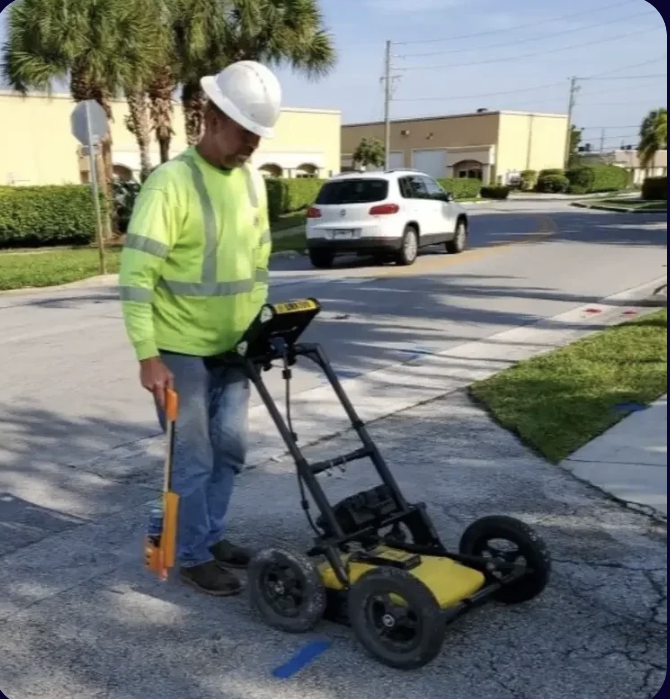
The second step is GPR scanning to detect non-conductive utilities that EM cannot find. Ground Penetrating Radar transmits electromagnetic pulses into the ground and images the reflections from subsurface boundaries — including the interface between soil and a PVC water main, HDPE force main, concrete storm drain, or fiber optic conduit. GPR scanning in South Florida is essential because much of the region's water distribution, stormwater, and private utility infrastructure is non-metallic.
GPR scanning is also used to identify abandoned utilities that have lost their traceability, underground storage tanks, voids, and other subsurface anomalies that EM cannot detect. The combination of EM and GPR provides ASCE 38-02 Quality Level B designating — the highest confidence level achievable without physical excavation.
Step 3 — Vacuum Excavation Potholing
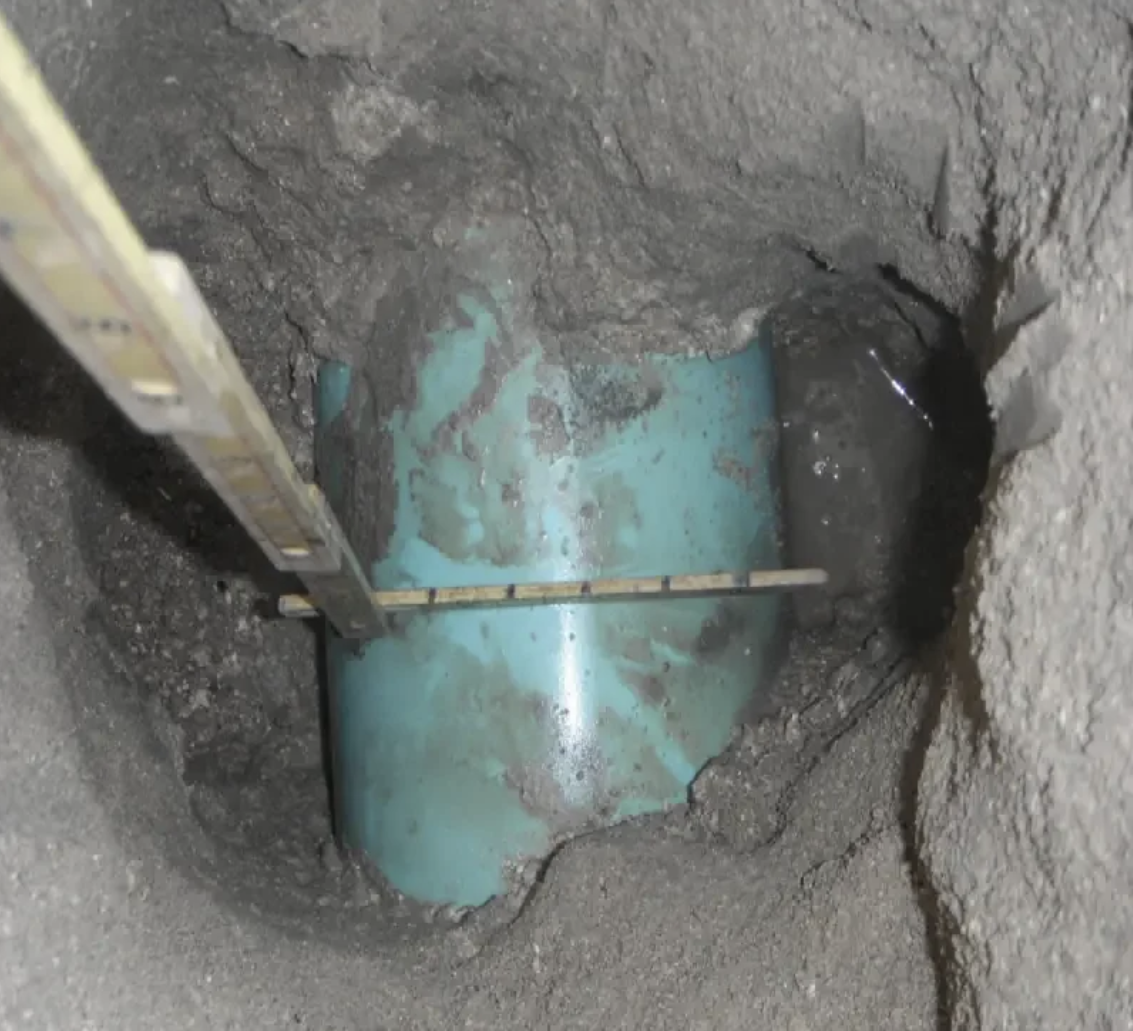
For utilities at or near your bore path, excavation alignment, or design conflict, the third step is vacuum excavation potholing to physically expose the utility and confirm its exact depth, position, and condition. This physical verification — called ASCE 38-02 Quality Level A — is the gold standard for utility verification and is required for many FDOT and municipal projects in South Florida.
Potholing removes all uncertainty about a specific utility's location. Once a utility is exposed and measured, your engineer has the data needed to design around it, your bore operator knows exactly where to steer, and your excavation crew knows the depth they are working toward. There is no substitute for physical confirmation when working near critical or high-consequence utilities.
When Is Utility Verification Required?
While professional utility verification is best practice on any South Florida excavation project, it is specifically required or strongly recommended for:
- Horizontal Directional Drilling (HDD) and auger boring projects
- FDOT projects requiring SUE Quality Level A or B data
- Projects in congested utility corridors or near high-consequence utilities
- Commercial demolition and redevelopment on sites with unknown private utilities
- Deep excavation and foundation work near existing utilities
- Any project where utility record drawings are unavailable, incomplete, or dated
Frequently Asked Questions — Utility Verification
Is utility verification the same as private utility locating?
Utility verification is a broader term that encompasses private utility locating as one step in the process. Private utility locating (EM locating) is the first phase of verification — it identifies and marks utilities. Verification also includes GPR scanning to find non-conductive utilities and potholing to physically confirm depths. The full three-step verification process gives you the highest possible confidence in underground conditions before digging begins.
How does utility verification reduce project risk?
Utility strikes on construction sites result in project shutdowns, costly utility repairs, regulatory violations, worker injury risk, and significant contractor liability. The cost of a comprehensive utility verification program — EM locating, GPR, and potholing at key conflict locations — is typically a small fraction of the cost of a single utility strike. More importantly, verification prevents the schedule disruptions and safety incidents that strikes cause, protecting your project, your crew, and your reputation.
Do you provide utility verification for FDOT District 4 projects in South Florida?
Yes. We provide SUE Quality Level B (EM + GPR) and Quality Level A (potholing) utility verification services for FDOT District 4 projects throughout Broward, Miami-Dade, and Palm Beach County. We are familiar with FDOT's utility accommodation policy, D4 project procedures, and the documentation requirements for SUE deliverables on FDOT contracts. Call (954) 849-2859 to discuss your FDOT project utility verification needs.